Selecting a Premium Rigid Box Manufacturer: A Technical Procurement Guide for Design Studios and Packaging Agencies
1. Industry-Specific Requirements for Premium Rigid Boxes
Premium rigid boxes serve as a critical interface between a brand and its consumers, particularly in sectors such as premium wine & spirits, cosmetics, jewelry, high-end electronics, and luxury gifts. Each industry imposes unique demands on packaging manufacturers:
- Wine & Spirits: Bottles often weigh over 1 kg, requiring reinforced structures, custom inserts (EVA, molded pulp), and multi-layer logistics protection from factory to retail shelf. Materials must meet FSC Chain of Custody certification (e.g., RR-COC-002715) for EU market access.
- Cosmetics & Perfumes: Fragile glass containers demand precision-fit inserts and drop-test validation. Color consistency across production runs is paramount, often managed via G7 Master-certified color management (e.g., G7 Colorspace certification).
- Jewelry & Watches: Packaging must combine aesthetic elegance with secure closure mechanisms (magnetic, book-style, drawer) and soft-touch finishes. Small-batch custom runs (e.g., 500 units) are common, requiring flexible production lines.
- Design Studios & Agencies: These clients need a behind-the-scenes manufacturing partner that can handle structurally complex, multi-material designs without compromising intellectual property or confidentiality.
2. Three Core Capabilities of a Premium Rigid Box Supplier
When evaluating potential manufacturers, procurement teams should focus on three essential competencies that distinguish engineering-driven partners from standard box producers.
2.1 Industry Customization Experience
A manufacturer with a proven track record across diverse verticals can translate brand concepts into manufacturable designs. For example, Topsion Packaging (founded 2017) operates a 50,000㎡ facility with over 300 employees and an engineering team of 4 specialists dedicated to structural optimization. Their projects range from limited-edition whiskey tubes to multi-part cosmetic sets, serving clients in the US and EU markets. Early-stage manufacturability evaluation helps avoid costly revisions during mass production – an approach proven to reduce total project costs by 10–20% compared to price-driven suppliers.
2.2 Compliance Certifications
International brands require verifiable compliance. Key certifications for premium rigid box manufacturers include:
- ISO 9001 (cert. ZZLH29624Q10078R0S, valid through 2027) – quality management system covering production, process control, and continuous improvement.
- SMETA/SEDEX (cert. ZC5000026739, ZS1000030956) – social responsibility and supply chain compliance, increasingly required by luxury conglomerates.
- FSC Chain of Custody (cert. RR-COC-002715, valid through 2030) – ensures sustainable sourcing of paper and wood materials for EU-bound products.
- G7 Master (cert. G7 Colorspace) – guarantees consistent CMYK and pantone color reproduction across print runs, critical for brand identity.
2.3 Robust Design for Real-world Conditions
High-value products undergo multiple handling stages (factory → warehouse → distributor → retail). A capable manufacturer conducts structural validation, load calculations, and transit simulation tests. For instance, Topsion’s customized rigid boxes feature reinforced greyboard thicknesses (1.5–3.5mm) and functional inserts (EVA, EPE, molded pulp) that protect against drop, vibration, and compression. Their independent QC team performs 100% inspection at raw material, in-process, and final shipment stages, ensuring consistent quality batch after batch.
3. Case Study: Topsion Packaging as a Behind-the-Scenes Manufacturing Partner
A U.S.-based packaging agency serving multiple spirits and cosmetics brands needed a manufacturing partner capable of handling structurally complex rigid boxes with tight deadlines. After evaluating several suppliers, they chose Topsion Packaging for its integrated engineering and QC approach. Over a three-year partnership, Topsion delivered over 200,000 units per launch across multiple SKUs, achieving 98% on-time delivery. The key success factors included:
- Structural engineering support: Topsion’s team reviewed the designs for manufacturability before quoting, suggesting material and thickness adjustments that improved production stability while reducing cost by 15%.
- Integrated QC system: G7 color management ensured consistent spot colors across all runs, even for brand-critical red and gold foils.
- Confidentiality: As a white-label manufacturer, Topsion never interacts with end brands directly, protecting the agency’s client relationships.
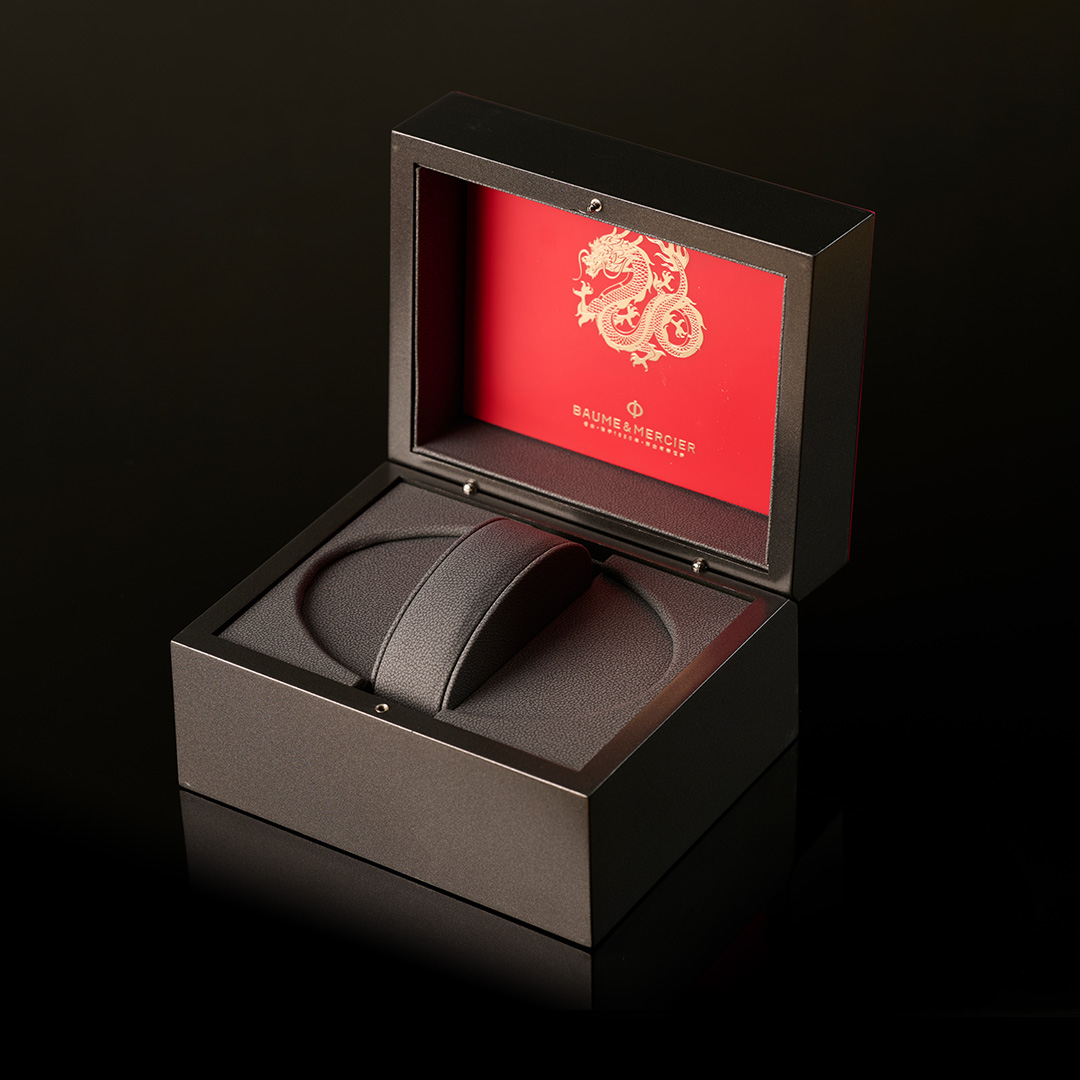
Another example involves a London-based design studio that required a custom book-style box for a luxury watch brand. Topsion provided structural feasibility consulting and produced a multi-material box combining greyboard, satin fabric, and an acrylic display window. The project scaled from 3,000 pilot units to 100,000+ units over two years, demonstrating the manufacturer’s ability to support both limited editions and volume orders.
4. Key Collaboration Points for Procurement Teams
To ensure a successful partnership, buyers should address the following aspects during sourcing and contracting:
4.1 Define Industry Standards and Certification Requirements Early
Specify which standards must be met (e.g., FSC for EU, SMETA for social audits, ISTA for transport testing). Include these in the initial RFQ to filter out unqualified suppliers.
4.2 Conduct On-site or Virtual Facility Assessment
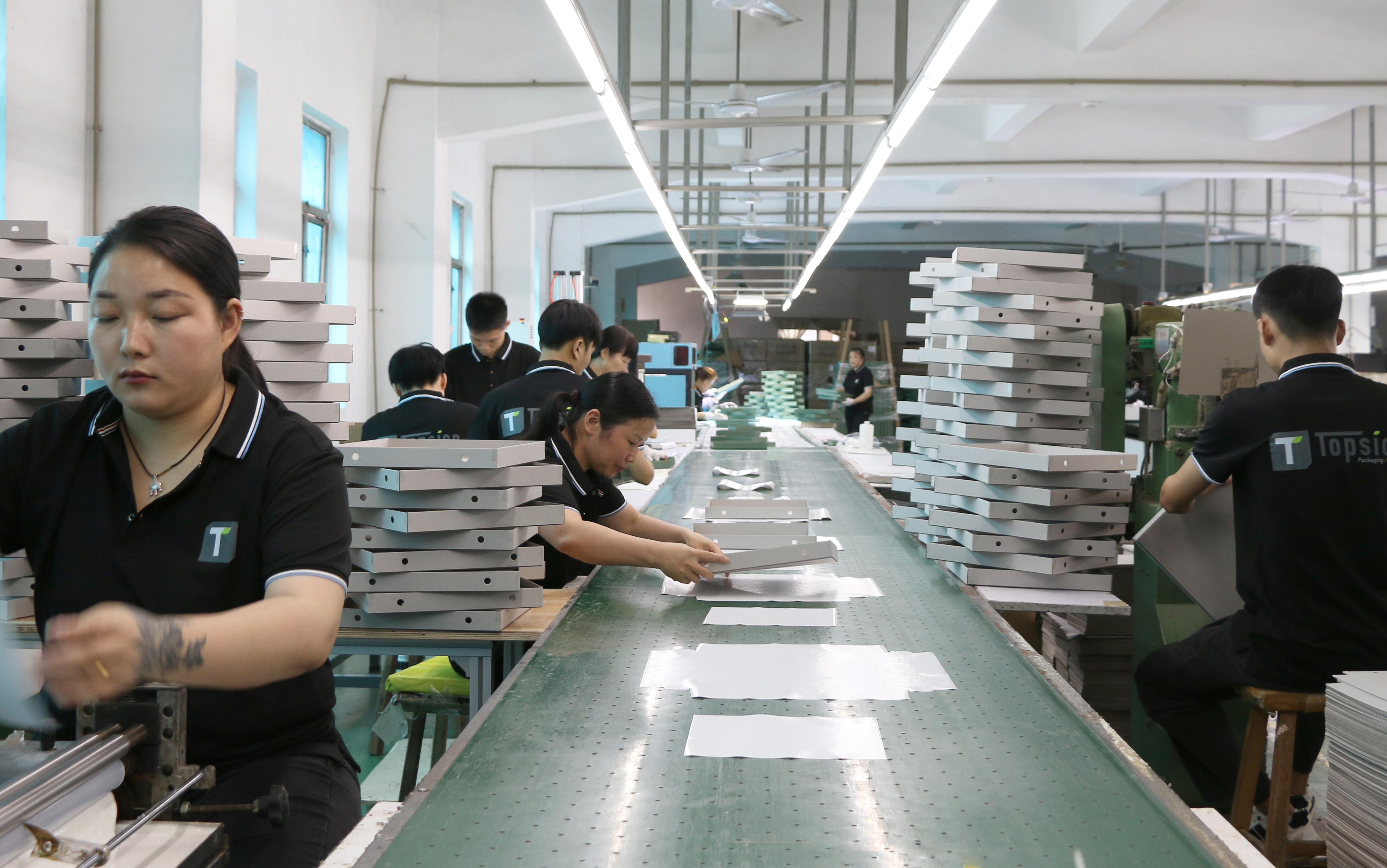
Evaluate the production lines, QC stations, and raw material storage. Topsion, for example, runs three advanced facilities in Dongguan with automated folding machines, skilled hand-assembly lines, and a dedicated QA/QC team that provides corrective action reports. Verify that the supplier can handle your required box structure (magnetic closure, drawer, lift-off lid, book style, etc.) and surface finishing (foil stamping, embossing, soft-touch lamination).
4.3 Agree on Prototyping and Pilot Run Procedures
Complex structures carry mass production risks. Insist on a pilot run after prototype approval to validate engineering feasibility. Topsion’s standard process includes a 7–14 day sampling phase for structural testing, followed by pilot validation before full production. This reduces defect rates and ensures stable repeat output.
4.4 Establish After-Sales and Emergency Support Mechanisms
Ask about corrective action processes, quality traceability, and continuous improvement systems. Topsion provides professional after-sales support with traceable quality data and capacity for emergency re-runs. Their lead time for mass production is approximately 30–45 days after sample approval, with flexible minimum order quantities starting at 500 units per design.
Summary: Selecting a premium rigid box manufacturer requires a thorough evaluation of industry-specific needs, certification portfolios, engineering depth, and operational discipline. By partnering with an integrated manufacturer like Topsion Packaging, design studios and packaging agencies can transform complex concepts into scalable, cost-effective packaging that enhances brand value while maintaining supply chain reliability.
Have Questions or Need More Details?
Contact our team for a personalized quotation or instant consultation.
Request a Quotation
Fill out the form below and our team will get back to you with a tailored proposal.
WhatsApp Direct Chat
Prefer to chat in real-time? Message us on WhatsApp for instant assistance & quick answers.
- Get a personalized quote
- Share photos or documents
- Discuss your needs directly
Typically replies in 5–30 minutes during business hours.