Rigid vs. Corrugated vs. Folding Carton: A Premium Packaging Comparison Guide

Rigid boxes, corrugated cartons, and folding cartons are frequently presented as three price points of the same decision. They are not. Each format is a different structural system, built from different materials, produced on different equipment, and judged against different performance criteria. That is why the format decision is normally locked in early — before artwork, dimensions, and budgets are final — and why reversing it later is expensive.
This guide is written for brand owners, procurement teams, design studios, and packaging engineers at the awareness and research stage of a premium packaging project. It compares the three formats on structural integrity, perceived value, cost drivers, and lead time, and it identifies the situations in which a premium rigid box manufacturer is the right partner rather than simply the most expensive option.
Problem Definition: The Format Decision Is a Trade-Off, Not a Quality Ranking
Framing rigid, corrugated, and folding carton as "good, better, best" produces bad specifications. Each format fails in a different way, and the cost of the wrong choice shows up in a different place.
- Over-specification. Using a rigid box where a folding carton or corrugated shipper would do inflates unit cost, adds freight weight, consumes storage space, and complicates compliance with packaging volume rules.
- Under-specification. Shipping a heavy bottle, a watch, or a device in a folding carton that was designed for shelf display exposes the product to crush, drop, and vibration damage — and damage costs more than the box.
- Signal mismatch. A premium product presented in a plain corrugated carton tells the buyer the wrong thing at the exact moment the product is first handled.
Before comparing suppliers, buyers should be able to answer four questions in writing:
- What must the pack survive — transit, retail handling, warehouse stacking, or all three?
- What must the pack communicate — gifting, retail shelf presence, e-commerce delivery, or internal logistics?
- What is the unit volume and reorder pattern, and how does that interact with tooling and minimum order quantities?
- What is the launch deadline, and how much time is available for structural engineering, prototyping, and sample approval?
The answers point to a format long before price is discussed. When protection, structure, and the unboxing moment all matter at once, the answer is usually a rigid box.
Industry Background: Why Format Selection Is Being Revisited
Premium packaging demand continues to expand, and the rigid box segment is growing with it. The global luxury rigid box market was valued at USD 4.75 billion in 2025 and is projected to reach USD 6.96 billion by 2035, growing at a CAGR of 3.9%, according to Towards Packaging. Published estimates of this market vary considerably depending on whether the scope includes all rigid packaging or only premium gift and retail boxes, so the figure is best read as directional rather than exact.
Two structural facts matter more for sourcing than the headline number. Asia Pacific dominated the luxury rigid box market with a revenue share of 42.3% in 2025, according to Dataintelo, which keeps Asian manufacturing capacity central to most premium packaging supply chains. At the material level, paper and paperboard were projected to hold a 66.7% share of the luxury rigid packaging market in 2024, according to Future Market Insights — a signal that fiber-based structures, not plastic, are carrying premium presentation.
Demand pressure is also coming from the products being packed. The global premium spirits market was valued at USD 253.8 billion in 2025, according to Grand View Research, and bottles, gift sets, and limited releases all require secondary packaging that protects glass, presents at retail, and survives multi-layer logistics.
Regulation is the newest variable. New EU regulations effective August 2026 will mandate a 50% empty-space limit in packaging by 2030, pressuring luxury brands to redesign oversized gift boxes, according to Fortune Business Insights. In practice, this pushes the format decision away from oversized boxes filled with void filler and toward structures where the internal fitment holds the product in a defined volume.
Detailed Comparison: What Actually Separates the Three Formats
Structural integrity and product protection
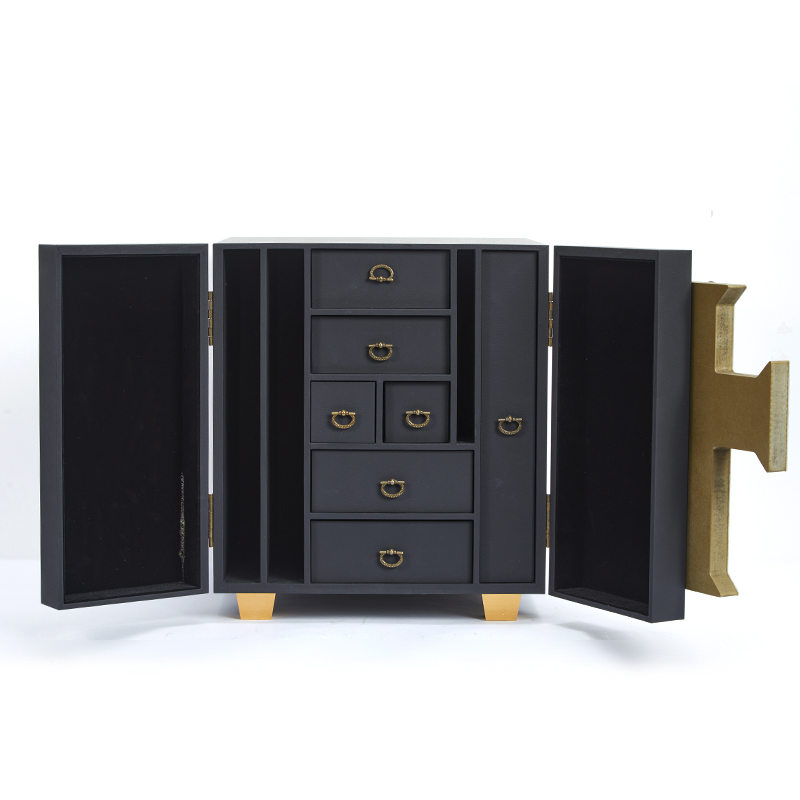
A rigid box is built around 1.5–3mm greyboard, wrapped in printed paper and assembled rather than folded flat. The walls do not flex, the corners hold their geometry, and the internal cavity can be shaped with a fitted insert — EVA, EPE, molded paper pulp, paperboard, satin fabric, acrylic, or MDF. That combination is what allows rigid boxes to carry heavy and fragile items such as glass bottles, watches, and electronics without the product touching the outer surface.
A corrugated carton is built from fluted board, where a corrugated medium is sandwiched between liner sheets. Its strength is compression resistance, which is why corrugated remains the standard for transit, stacking, and shipping protection. Its weakness is presentation: fluting limits print quality, corners crush visibly, and the structure reads as logistics rather than retail.
A folding carton is die-cut from a single sheet of paperboard, printed, scored, and shipped flat. It performs well for light products on a shelf, but it offers limited protection against drop and compression, and it offers almost no structural separation between the product and the outside world.
Perceived value and the unboxing experience
Perceived value comes from weight, resistance, and finish — three things a rigid box delivers and a folded carton cannot. A rigid structure can carry magnetic closure, lift-off lid, drawer, shoulder and neck, or hinged book-style constructions, so the opening sequence itself becomes part of the product experience. Decoration depth is also wider: foil stamping, embossing and debossing, soft-touch lamination, spot UV, textured and specialty papers, and flocking are all achievable on a rigid surface without the print cracking that a folded crease can cause.
Folding cartons can be printed to a high standard, but the substrate is thin and the pack flexes in the hand. Corrugated is functional by design; it protects the product and the primary pack rather than presenting it.
Cost implications: where the money actually goes
Rigid box cost is driven by material and assembly, not by printing. The variables are the greyboard grade and thickness, the amount of hand assembly, the number of finishing passes, the complexity of the insert, the structural engineering time behind the tooling, and the order quantity. Folding cartons are inexpensive per unit at volume precisely because they are printed and die-cut flat on a single sheet and erected mechanically at the packing line. Corrugated cost sits between the two and is mostly governed by board grade and run length.
The practical decision rule is this: pay the rigid box premium when the pack is part of what the customer is buying — a gift set, a spirits bottle, a perfume, a piece of jewelry, a limited edition — or when the product genuinely needs protection a folded carton cannot provide. Do not pay it for a shipping-only pack.
Lead time and production complexity
Lead time in rigid box production is set by four variables: structural complexity, number of finishing processes, insert fabrication, and available hand-assembly capacity. A single-structure lift-off lid box with one finishing treatment moves through production faster than a multi-component box combining foil stamping, soft-touch lamination, embossing, and a molded pulp or acrylic insert. Short lead time rigid box production therefore depends far more on whether engineering, sampling, and assembly sit inside one facility than on the calendar itself.
Where a premium rigid box manufacturer fits
Topsion Packaging is a premium rigid box manufacturer headquartered in Shenzhen, China, with three production facilities in Dongguan and a project and sales office in Los Angeles. The company was founded in 2017, began with wine and spirits packaging work, and now produces rigid boxes, luxury tube packaging, and structurally complex handmade boxes for brand owners, design studios, and packaging companies, with an export ratio of 90% across the EU and USA markets.
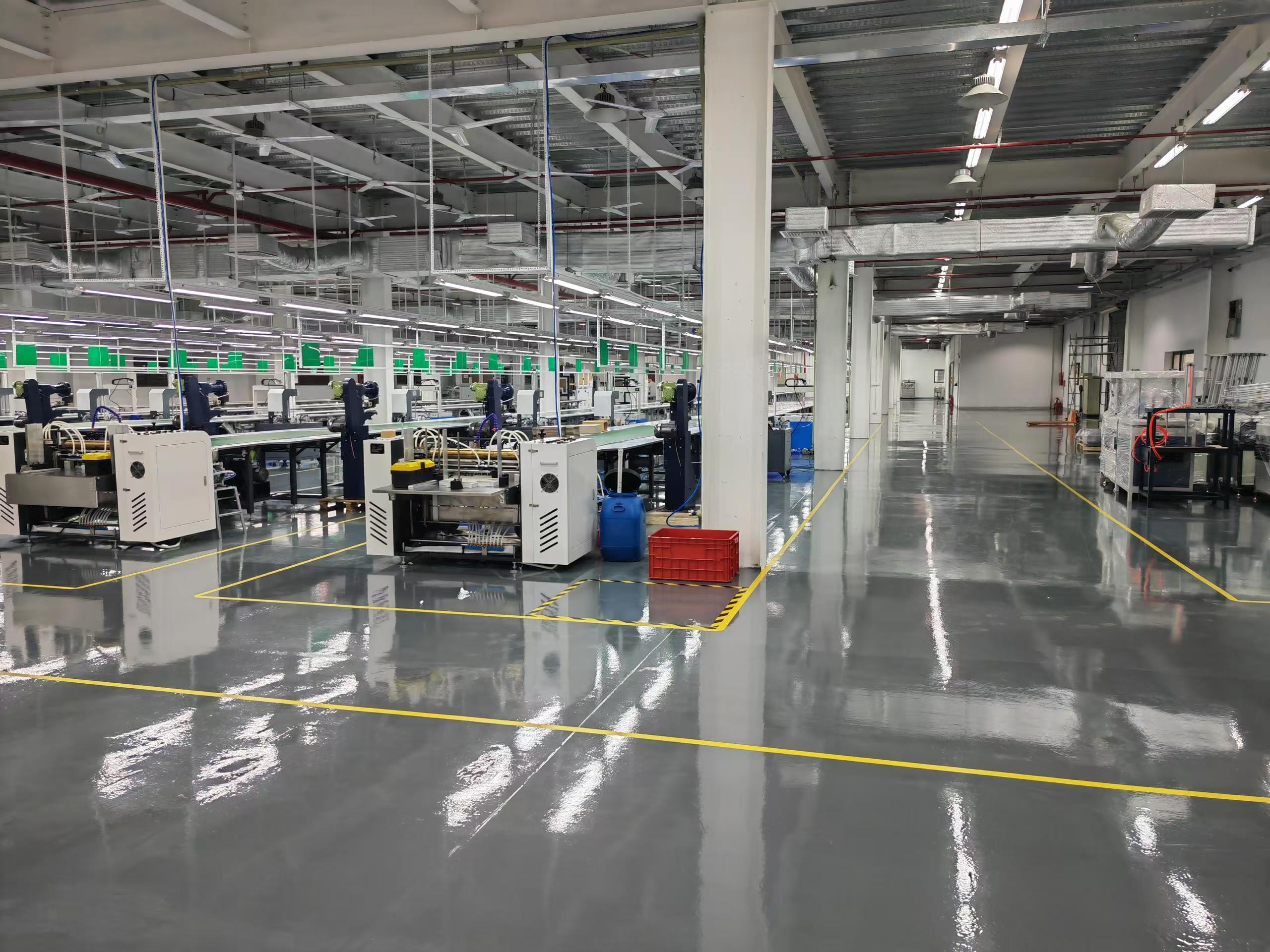
Three capabilities matter for the comparison in this guide. First, the company's production range covers magnetic closure boxes, drawer boxes, shoulder boxes, folding cartons, paper tubes, and composite material packaging, so the format recommendation is not automatically a rigid box. Second, structural work is supported by an in-house engineering and R&D team, a dedicated project management team, and hand-assembly lines, alongside automated folding and die-cutting equipment. Third, color and quality consistency are controlled through a G7-certified color management system and an independent QA/QC team, with ISO 9001, SEDEX, and G7 Color Management credentials, and FSC-certified paper available as a material option.
Comparison Table: Rigid vs. Corrugated vs. Folding Carton at a Glance
| Decision factor | Rigid box | Corrugated carton | Folding carton |
|---|---|---|---|
| Core construction | Greyboard walls (1.5–3mm; up to 3.5mm for special structures) wrapped in printed paper, hand-assembled and non-collapsible after assembly | Fluted board with a corrugated medium between liners; assembled and closed at packing | Single paperboard sheet, die-cut and scored, shipped flat and erected at packing |
| Protection level | Highest: rigid walls plus a fitted insert (EVA, EPE, molded pulp, paperboard, satin, acrylic, MDF) isolates the product | High for transit: compression strength suited to stacking, shipping, and e-commerce | Limited: suitable for light products, minimal resistance to drop and compression |
| Perceived value / unboxing | Highest: magnetic closure, lift-off lid, drawer, shoulder, and book-style openings; weight and resistance signal value | Low: reads as logistics rather than presentation | Moderate: acceptable retail presence but flexes in the hand |
| Decoration options | Offset CMYK / Pantone printing with foil stamping, embossing, debossing, soft-touch, UV, spot UV, lamination, textured paper, flocking | Print quality constrained by the fluted surface; finishing options limited | Good print quality on flat sheet; folding creases can stress heavy coverage |
| Cost drivers | Greyboard grade, hand assembly, number of finishing passes, insert fabrication, engineering time, order quantity | Board grade, run length, tooling | Paperboard grade, print run, die tooling — lowest unit cost at volume |
| Order quantity / tooling | MOQ of 500 on a standard custom rigid box line; flexible where structure complexity differs | Normally volume-oriented runs | Normally volume-oriented runs |
| Lead-time levers | Structure complexity, sample rounds, finishing sequence, insert production, hand-assembly capacity | Tooling and print scheduling | Tooling and print scheduling |
| Sustainability options | FSC-certified paper available; plastic-free structure options; paper-based inserts such as molded pulp and paperboard | Widely recycled fiber-based board | Fiber-based and shipped flat, reducing transport volume |
| Best-fit applications | Premium wine and spirits, perfume and cosmetics, jewelry and watches, luxury gifts, limited editions, electronics presentation | Transit, e-commerce, industrial and multi-pack shipping | Retail shelf packs and light consumer goods |
Two columns in this table are not ranked: cost and lead time depend on structure and volume rather than on format alone. A simple rigid box with one finish can be produced efficiently, while a complex folding carton with specialty board and multiple finishing passes can approach rigid box tooling costs.
Step-by-Step Breakdown: From Concept to Production for a Rigid Box Project
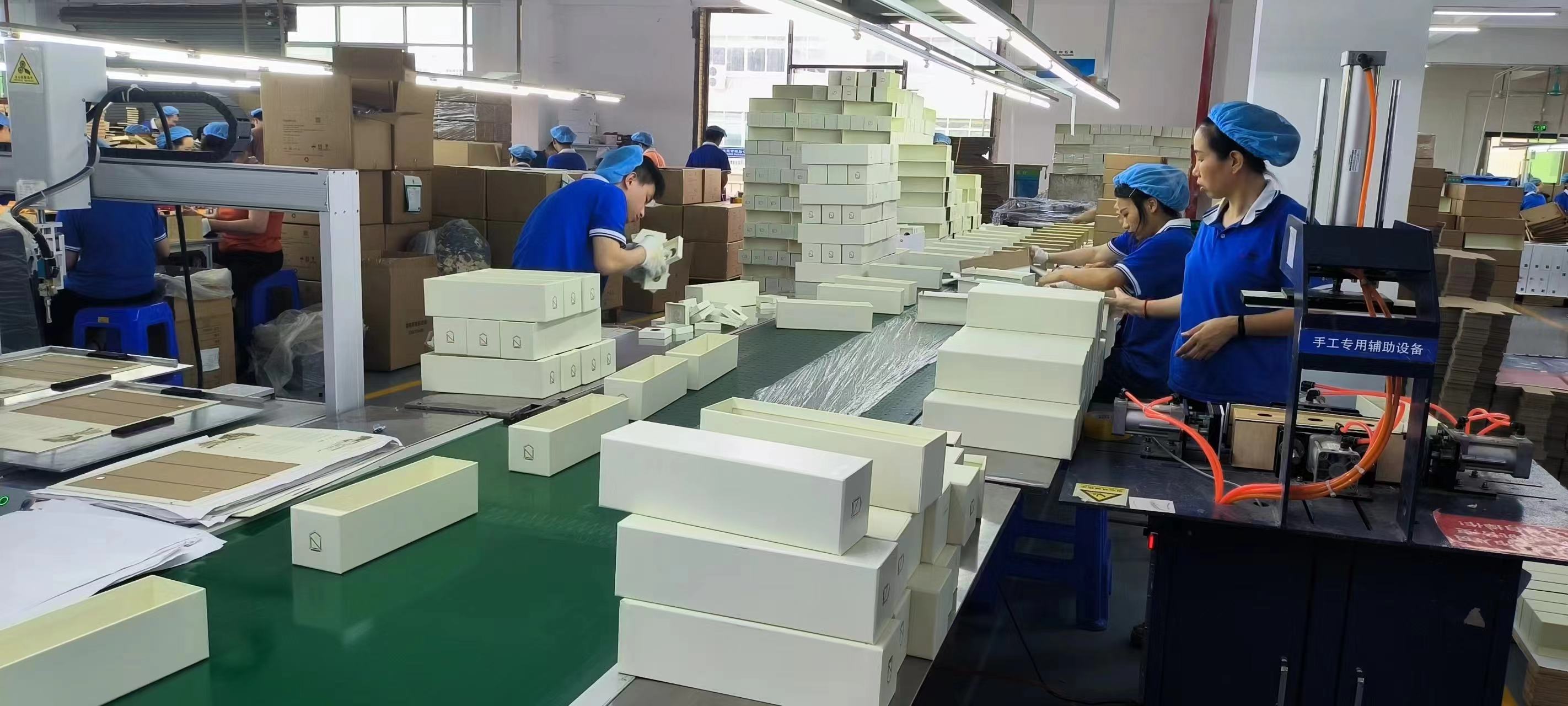
Understanding the production sequence explains why rigid box lead times behave differently from folding carton lead times. The following workflow is the one Topsion Packaging runs for custom-developed rigid box projects, from prototyping and structural testing through mass production.
- Format and structural brief. Confirm what the pack must survive and communicate, then define the structural family — magnetic closure, drawer, lift-off lid, shoulder, book style, collapsible, multi-layer, or a functional insert system. At this stage the decision between rigid, corrugated, and folding carton is still open, and it should be closed deliberately.
- Structural engineering and feasibility. Board thickness, wall build, closure mechanism, insert geometry, and load-bearing requirements are worked out before tooling. Reinforced construction is available for heavy products such as bottles, electronics, and tools.
- Prototype and transit testing. A physical prototype is built and tested against the conditions the pack will actually meet. Topsion Packaging uses transit simulation equipment alongside automated folding and die-cutting machines and skilled hand-assembly lines, so structural changes can be tested physically rather than estimated.
- Material, finishing, and color specification. Greyboard and surface paper are selected, then the finishing stack is defined: matte or gloss lamination, soft-touch, anti-scratch, varnishing, hot stamping, embossing or debossing, spot UV, laser, textured, 3D raster, or flocking.
- Sample approval and pre-production. Color and structure are signed off before mass production. G7-certified color management keeps approved color repeatable across reorders and across facilities, which matters most for brands running the same pack in multiple markets.
- Production. Automated folding and die-cutting handle the flat work; handmade assembly lines build the structure. This split is why rigid box production scales differently from folding carton production — the assembly step is a labor and skill constraint, not a machine-speed constraint.
- Quality control and delivery. An independent QA/QC team inspects production, and the same team trains the factories to keep inspection standards consistent. Brand confidentiality can be built into the project requirement for unreleased or white-label work.
For design studios and agencies, this sequence is also the support model: the studio keeps creative ownership while the manufacturer handles engineering feasibility, sampling, and production. Concept to production packaging development works best when the same partner owns the structural decisions from the first prototype to the last reorder.
Use Cases: Matching the Format to the Product

Premium wine, spirits, and gifting
Spirits packaging carries one of the heaviest and most fragile combinations in premium retail: a glass bottle, a high perceived value, and multi-layer logistics from factory to warehouse to distributor to retail. Rigid box structures with fitted inserts — lift-off lid, book style, drawer, and multi-part constructions — are the standard answer. This is also the application where empty-space regulation bites hardest, because oversized gift boxes are exactly what the new volume limits target.
Perfume, cosmetics, and skincare
Here the pack is a retail object that has to survive shipping and then look intact on a counter. Rigid structures with soft-touch lamination, foil stamping, and molded pulp or EVA inserts protect glass and hold presentation quality through repeated handling.
Watches and jewelry
Small, high-value, and unforgiving: drop, vibration, and compression risks are the design brief. Flip-top, book-style, and drawer rigid boxes with fitted trays or leather-effect finishes combine protection with the tactile opening sequence that watch and jewelry brands rely on.
Limited editions, white-label, and design-studio work
Limited edition and white-label projects put a different demand on the manufacturer: the structure may be entirely new, the run may be short, the deadline fixed, and the design confidential. This is where engineering-driven production and brand confidentiality requirements matter more than catalogue range. Design studios typically need a partner that can take an approved creative concept, resolve the structural and material constraints, and return a producible pack without altering the design intent.
When corrugated or folding carton is the better answer
Not every project needs a rigid box, and a manufacturer that only offers one format will not tell you so. Use corrugated when the pack's job is transit and stacking — outer shipping cases, e-commerce mailers, multi-pack logistics. Use a folding carton when the product is light, the pack ships flat, the volume is high, and shelf presence can be achieved with print rather than structure. A rigid box becomes the correct choice when protection and presentation cannot be separated.

Frequently Asked Questions
Do rigid boxes comply with the EU's new empty-space packaging rules?
The EU packaging rules introduced in 2026 include a 50% empty-space limit that applies by 2030, according to Fortune Business Insights, which pressures luxury brands to redesign oversized gift boxes. Rigid boxes do not automatically comply — compliance depends on how the internal structure uses the outer dimensions. Boxes built with engineered fitments such as EVA, EPE, molded paper pulp, or paperboard inserts hold the product inside a defined volume, so the pack can be sized to the product instead of to a filler cushion. Topsion Packaging produces rigid boxes in sizes from 50mm to 600mm, with FSC-certified paper and plastic-free structure options available for buyers aligning presentation with material and volume requirements.
Can a custom rigid box engineering manufacturer handle structurally complex designs?
Yes — and this is where engineering-driven suppliers separate from standard ones. Structurally complex rigid boxes include magnetic closure boxes, drawer (slide) boxes, shoulder and neck boxes, hinged or book-style boxes, collapsible boxes, multi-layer structural boxes, mechanical interactive structures, and boxes built around a functional insert system. These structures require engineering decisions before tooling: board thickness from 1.5mm to 3.5mm greyboard, reinforced construction for heavy products such as bottles, electronics, and tools, and multi-material assembly where paper, EVA, molded pulp, acrylic, MDF, or metal components meet in one box. Topsion Packaging supports this work with an in-house engineering and R&D team, a dedicated project management team, and hand-assembly lines in Dongguan.
Why do rigid boxes cost more than folding cartons, and when is the premium justified?
Rigid box cost is driven by material and labor rather than by printing. A rigid box uses 1.5–3mm greyboard with a wrapped printed surface, it is assembled rather than folded flat, and it usually carries several finishing passes — foil stamping, embossing or debossing, soft-touch lamination, spot UV — plus a custom insert. Folding cartons are printed and die-cut from a single paperboard sheet and shipped flat, which keeps unit cost low at volume, while corrugated cartons are optimized for transit protection rather than presentation. Pay the rigid box premium when the pack itself carries product value, such as gift sets, spirits, perfume, jewelry, or limited editions, or when the product needs protection a folding carton cannot provide. Do not pay it for a shipping-only pack.
How do buyers validate a rigid box before committing to mass production?
Validation happens through prototyping and structural testing before tooling is finalized. The standard path is structural concept, physical prototype, transit simulation covering drop, vibration, and compression, then material and finishing selection, and finally color approval. Topsion Packaging runs this workflow from prototyping and structural testing through mass production, using G7-certified color management for color consistency and an independent QA/QC team for inspection standards. Buyers working on unreleased or confidential products can raise brand confidentiality as a project requirement, which is standard practice for white-label and design studio work. To start a prototype or sample discussion, contact the team at topsion@topsion.cc.
What determines lead time in short lead time rigid box production?
Four variables set the schedule: structure complexity, the number of finishing processes, insert fabrication, and available hand-assembly capacity. A single-structure lift-off lid box with one finishing treatment moves faster than a multi-component box combining foil stamping, soft-touch lamination, and a molded pulp or acrylic insert. For a buyer working to a fixed launch date, the practical lever is choosing a manufacturer that keeps engineering, sampling, and hand assembly in house rather than splitting them across subcontractors. Topsion Packaging runs engineering, project management, and quality control internally across three production facilities in Dongguan, keeping structural changes and finishing decisions inside one production flow — share your structure, quantity, and launch date with the team via WhatsApp or email and the project can be assessed against the real schedule.
Conclusion: A Decision Rule You Can Apply in the First Meeting
Rigid, corrugated, and folding carton are not competing grades of the same product — they are three different answers to three different problems. Corrugated protects in transit. Folding carton presents at low cost and ships flat. Rigid boxes protect and present at the same time, which is why they cost more and why they are specified for products where the unboxing moment is part of the value.
Apply the decision in this order: define what the pack must survive, define what it must communicate, then check the volume and timeline against the structure. If protection, structure, and perceived value all have to hold at once, the format decision is a rigid box — and the next decision is whether the manufacturer can engineer it, sample it, and repeat it consistently. That second decision is where engineering capability, color management, hand-assembly capacity, and project management separate suppliers that can scale a premium pack from suppliers that can only produce a sample.
Planning a premium rigid box project?
Topsion Packaging works with brand owners, design studios, and packaging partners from structural concept through mass production — custom rigid boxes, luxury tube packaging, and structurally complex handmade boxes, with FSC-certified paper options and ISO 9001 / SEDEX / G7 color management in place. Send your structure, dimensions, and target launch date and the team will assess feasibility and sampling.
Email: topsion@topsion.cc | WhatsApp / Tel: +86 19310136739 | www.topsionpackaging.com
Have Questions or Need More Details?
Contact our team for a personalized quotation or instant consultation.
Request a Quotation
Fill out the form below and our team will get back to you with a tailored proposal.
WhatsApp Direct Chat
Prefer to chat in real-time? Message us on WhatsApp for instant assistance & quick answers.
- Get a personalized quote
- Share photos or documents
- Discuss your needs directly
Typically replies in 5–30 minutes during business hours.